ListingBott Explained: From Onboarding Form to Indexed Backlinks
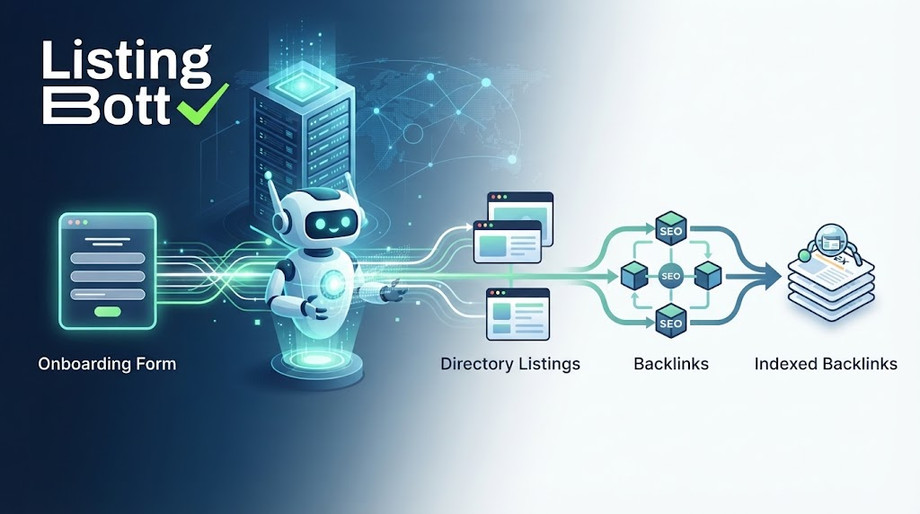
If you've never used a directory submission service before, the process can feel like a black box. Understanding each step — and why it's structured the way it is — makes it much easier to judge whether the results you eventually see actually match what was promised.
Why Walking Through the Steps Matters
A lot of skepticism around automated directory submission comes from not knowing what's actually happening between "I filled out a form" and "my domain rating went up." Once you see the individual steps, most of the mechanics turn out to be common sense applied consistently — the kind of discipline that's hard to maintain manually but straightforward to automate.
Step One: Telling It What You Want
Everything starts with a short onboarding form on ListingBott , where you specify your priority — domain rating growth, direct click traffic, or a blend of both. That input shapes everything downstream, including which of the 100 final listings get chosen.
Step Two: Building the Shortlist
Within one to two days, ListingBott's AI agents and human team assemble a shortlist of 100+ listings pulled from a database exceeding 10,000 directories, forums, and niche sites — a database that gets refreshed daily, so the options reflect current, active platforms rather than a stale list. High-authority names like Product Hunt, Capterra, GetApp, Software Advice, and SaaSworthy appear alongside smaller directories matched to your specific niche. Founders curious about what "good" looks like at this stage can compare the shortlist against a reference set of directories known for genuinely helping products get discovered .
Step Three: You Approve, Nothing Goes Live Without You
Because every listing is created under your own email, you retain the ability to edit, remove, or moderate the shortlist before a single submission goes out. This step is also where founders who already tried the free route — working through something like a list of no-cost listing sites worth reviewing before paying for anything — can spot overlaps and decide whether to remove sites they've already covered themselves.
Step Four: The Slow Roll
Publishing happens daily over roughly a month, deliberately paced to look like organic growth rather than a mass submission event — a pattern the service positions as 99.9% safe for your site's SEO standing. Weekly progress updates keep you informed without requiring you to check in constantly.
Step Five: Handling the Inevitable Duplicates
Across 10,000+ potential sources, some overlap is inevitable. When a chosen directory turns out to be a duplicate, it's automatically replaced with a new one, so the final count still lands at 100 unique placements.
Step Six: The Report, and the Waiting Game
Once publishing finishes, a human reviewer compiles a report of every published and indexed listing. Indexing itself can take up to two more months, since crawl speed varies by directory — a detail worth remembering before assuming a listing "didn't work" just because it hasn't shown up in search yet. This waiting period is also when the DR 0 to DR 15 guarantee is meant to be evaluated, not immediately after publishing ends.
Why This Sequence Exists
Each step exists to solve a specific failure mode of doing this manually: step one prevents wasted effort on the wrong kind of listings, step four prevents the spam-pattern problem, step five prevents a shrinking final count, and step six prevents false conclusions drawn too early. Skipping any one of them is usually where DIY directory campaigns quietly underperform.
What This Looks Like at Scale
For teams launching a product on a deadline, this process maps closely onto what a launch-oriented edition of the same submission workflow is meant to solve — coordinated, hands-off backlink building that runs in parallel with everything else a launch requires. For ongoing use outside of a single launch window, the standard version of the directory submission service covers the same six steps without tying them to a specific release date.